
An international research effort led by the University of St Andrews, with contributions from TU Delft and Merck KGaA, has demonstrated a practical method for converting common household plastic waste into chemical building blocks used in medicines, including well-known anti-cancer treatments. The work reframes polyethylene terephthalate (PET) waste not as a disposal problem, but as a viable raw material for high-value chemical manufacturing, with implications for both pharmaceutical engineering and circular economy design.
Kulyabin, P. S., Luk, J., Uslamin, E. A., Kolganov, A. A., Saini, G., Marcial‐Hernandez, R., Pancholi, K., Kühne, B., Dauth, A., McKay, A. P., Cordes, D. B., Pidko, E. A., & Kumar, A. (2025). From Plastic Waste to Pharmaceutical Precursors: PET Upcycling Through Ruthenium Catalyzed Semi‐Hydrogenation. Angewandte Chemie International Edition. https://doi.org/10.1002/anie.202521838
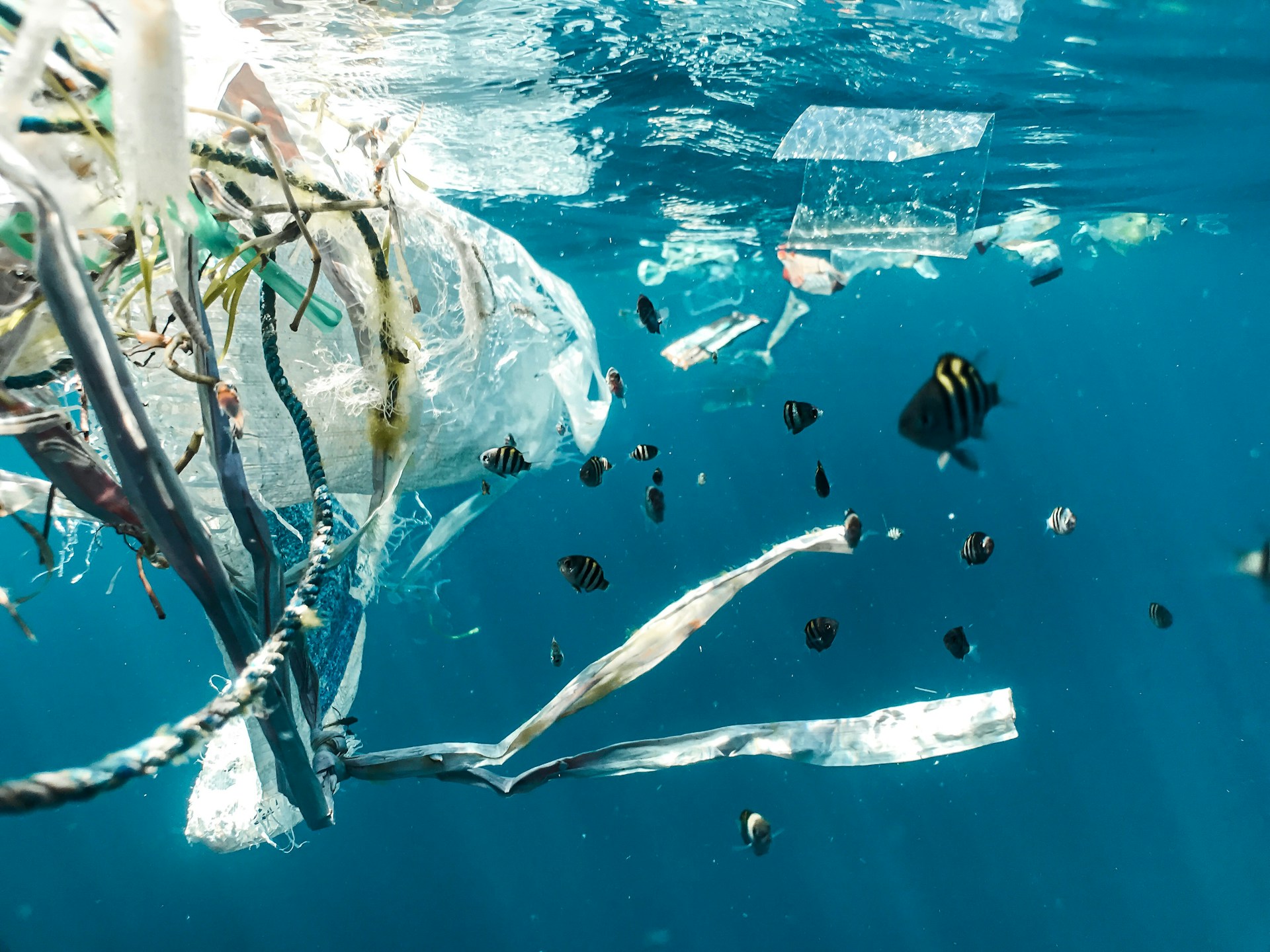
PET is one of the most widely used plastics in consumer products, found in beverage bottles, food packaging, and synthetic textiles. While mechanical recycling can reprocess PET into new plastic items, it often results in lower-quality materials and repeated recycling eventually becomes impractical. Chemical recycling offers an alternative by breaking PET down into smaller molecular components that can be repurposed into entirely different products. However, many chemical recycling routes have struggled with high costs, inefficient catalysts, or limited economic incentives.
Professor Evgeny Pidko from TU Delft in the Netherlands stated,
“In this study, we combined detailed kinetic and mechanistic analysis to understand catalyst behavior under the reaction conditions and used this knowledge to optimize the system towards record turnover numbers of up to 37,000. This emphasizes the importance of fundamental mechanistic insights to optimize catalyst durability and overall process efficiency.”
In this study, researchers developed a ruthenium-catalyzed semi-hydrogenation process that depolymerizes PET into a single, well-defined compound: ethyl-4-hydroxymethyl benzoate (EHMB). Rather than producing generic feedstocks that re-enter the plastics supply chain, the process selectively generates a molecule that is already used as an intermediate in pharmaceutical and agrochemical synthesis. From an engineering perspective, this selectivity is critical, as it reduces downstream purification steps and improves overall process efficiency.
EHMB is a precursor for several commercially important products, including the anticancer drug imatinib, tranexamic acid used in blood-clotting treatments, and certain agricultural chemicals. Today, these compounds are typically synthesized from fossil-derived raw materials using multi-step processes that rely on hazardous reagents and generate significant waste. By contrast, the PET-derived route replaces part of this fossil feedstock with post-consumer plastic, shifting both the material and environmental balance of production.
A streamlined life-cycle analysis carried out by the team compared the new process with conventional industrial methods for producing EHMB. The assessment identified clear reductions in environmental impact, particularly in raw material sourcing and waste generation. Rather than focusing on end-of-life recycling alone, the work highlights how upcycling strategies can embed sustainability directly into upstream chemical manufacturing.
Catalyst performance played a central role in making the process viable. Researchers at TU Delft carried out detailed kinetic and mechanistic studies to understand how the ruthenium catalyst behaves over time and under reaction conditions. By identifying how and when catalyst deactivation occurs, the team was able to optimize operating parameters and achieve turnover numbers as high as 37,000. For chemical engineers, this level of durability is a key step toward scaling catalytic upcycling beyond laboratory demonstrations.
Beyond pharmaceutical precursors, the study also showed that EHMB can be converted into a new type of recyclable polyester, suggesting a secondary materials pathway that remains compatible with circular economy principles. This flexibility points to a broader design philosophy in which waste plastics can feed multiple value chains rather than returning only to short-lived consumer products.
Industrial collaborators emphasized the relevance of the work for sustainable manufacturing. Pharmaceutical production is known for generating large amounts of waste per kilogram of active ingredient, making raw material choice and process efficiency critical levers for improvement. Integrating waste-derived feedstocks into drug synthesis offers one route to lowering environmental footprints without compromising performance or regulatory standards.
Taken together, the findings illustrate how advances in catalysis, reaction engineering, and materials chemistry can align environmental goals with industrial utility. By converting PET waste into molecules already embedded in pharmaceutical supply chains, the research moves plastic recycling beyond damage control and toward value creation. For engineers working across chemistry, manufacturing, and sustainability, the work provides a concrete example of how circular economy concepts can be implemented at the molecular level rather than treated as an afterthought.

Adrian graduated with a Masters Degree (1st Class Honours) in Chemical Engineering from Chester University along with Harris. His master’s research aimed to develop a standardadised clean water oxygenation transfer procedure to test bubble diffusers that are currently used in the wastewater industry commercial market. He has also undergone placments in both US and China primarely focused within the R&D department and is an associate member of the Institute of Chemical Engineers (IChemE).