
Led by Yuwei Gu, an assistant professor of chemistry and chemical biology at Rutgers University, a research team has demonstrated a new way to design plastics that break down predictably instead of persisting in the environment. Drawing on principles long used by biological systems, the researchers developed synthetic polymers whose chemical structure allows them to remain stable during use and then degrade under everyday conditions. The work offers a chemistry-based strategy for addressing plastic waste without relying on additives, extreme heat, or specialized recycling processes.
Yin, S., Zhang, R., Zhou, R., Murthy, N. S., Wang, L., & Gu, Y. (2025). Conformational preorganization of neighbouring groups modulates and expedites polymer self-deconstruction. Nature Chemistry. https://doi.org/10.1038/s41557-025-02007-3
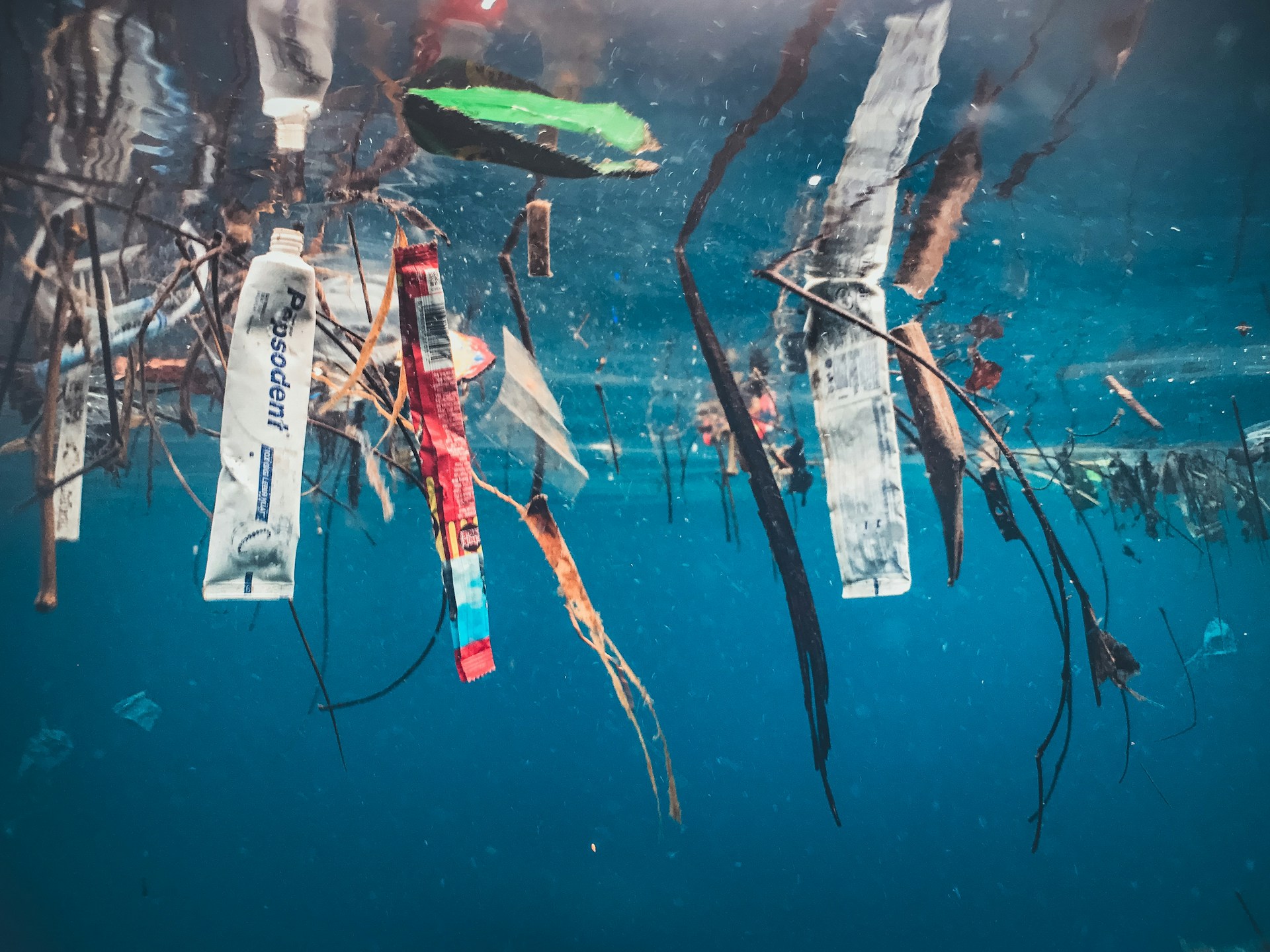
Plastic pollution has become a defining materials challenge of the past century. Most synthetic polymers are designed for durability, with strong chemical bonds that resist heat, moisture, and mechanical stress. While these properties make plastics useful, they also mean discarded products can remain in soil, water, and living systems for decades. In contrast, natural polymers such as DNA, RNA, proteins, and cellulose perform critical functions and then break down as part of normal biological cycles. The Rutgers team set out to understand why this difference exists and whether the same logic could be applied to man-made materials.
Yuwei Gu, an assistant professor of chemistry and chemical biology at Rutgers University stated,
“It was a simple thought, to copy nature’s structure to accomplish the same goal. But seeing it succeed was incredible.”
The key insight was structural rather than compositional. Natural polymers often contain neighboring chemical groups arranged in ways that make certain bonds easier to break once specific conditions are met. Gu and his colleagues reasoned that if this spatial arrangement could be replicated in synthetic polymers, degradation could be built into the material itself. Instead of changing what plastics are made of, they focused on how the building blocks are positioned relative to one another.
In their study, published in Nature Chemistry, the researchers showed that carefully arranging these neighboring groups creates what they describe as a kind of chemical “pre-organization.” Much like folding paper along a crease so it tears in a controlled way, this structural setup allows polymer chains to break apart far more easily once degradation begins. Importantly, the material remains mechanically robust until that process is activated.
The team demonstrated this concept using poly(dicyclopentadiene), a plastic commonly found in automotive parts and industrial equipment and known for being difficult to recycle or degrade. When produced using the new chemistry, samples of the material began breaking down at room temperature within hours to days, without the need for added heat or aggressive chemicals. Early tests indicated that the breakdown products were liquid and showed no immediate signs of toxicity, although further evaluation is ongoing.
One of the most significant aspects of the work is that degradation can be programmed. By adjusting the orientation and spacing of the chemical groups within the polymer, the researchers showed they could tune how quickly the material falls apart. In addition, degradation could be triggered or paused using external cues such as ultraviolet light or metal ions. This level of control means the same underlying plastic could be designed to last for hours, months, or years depending on its intended use.
Such control opens the door to practical applications beyond waste reduction. Packaging materials could be designed to degrade shortly after disposal, while long-life products like vehicle components could remain stable for years before breaking down at the end of service. The same principles could also be applied to timed drug-release systems, temporary coatings, or medical materials that safely dissolve after completing their function.
The research reflects a broader shift in polymer science toward life-cycle thinking. Rather than treating degradation as an afterthought managed through recycling or cleanup, the Rutgers approach embeds end-of-life behavior directly into the material’s chemistry. This reduces reliance on consumer behavior or infrastructure and instead places responsibility at the design stage.
The team is now focused on testing the environmental and biological impact of the materials throughout their full degradation process. They are also exploring how the chemistry might be integrated into existing manufacturing methods and whether it can be adapted to other widely used plastics. Collaboration with industry partners will be essential to assess scalability and cost.
While technical challenges remain, the work suggests a practical path forward for plastics that serve their purpose and then exit the system more cleanly. By borrowing a structural strategy from nature, the Rutgers researchers have shown that durability and degradability do not have to be mutually exclusive, and that smarter chemistry can play a central role in reducing long-term plastic pollution.

Adrian graduated with a Masters Degree (1st Class Honours) in Chemical Engineering from Chester University along with Harris. His master’s research aimed to develop a standardadised clean water oxygenation transfer procedure to test bubble diffusers that are currently used in the wastewater industry commercial market. He has also undergone placments in both US and China primarely focused within the R&D department and is an associate member of the Institute of Chemical Engineers (IChemE).