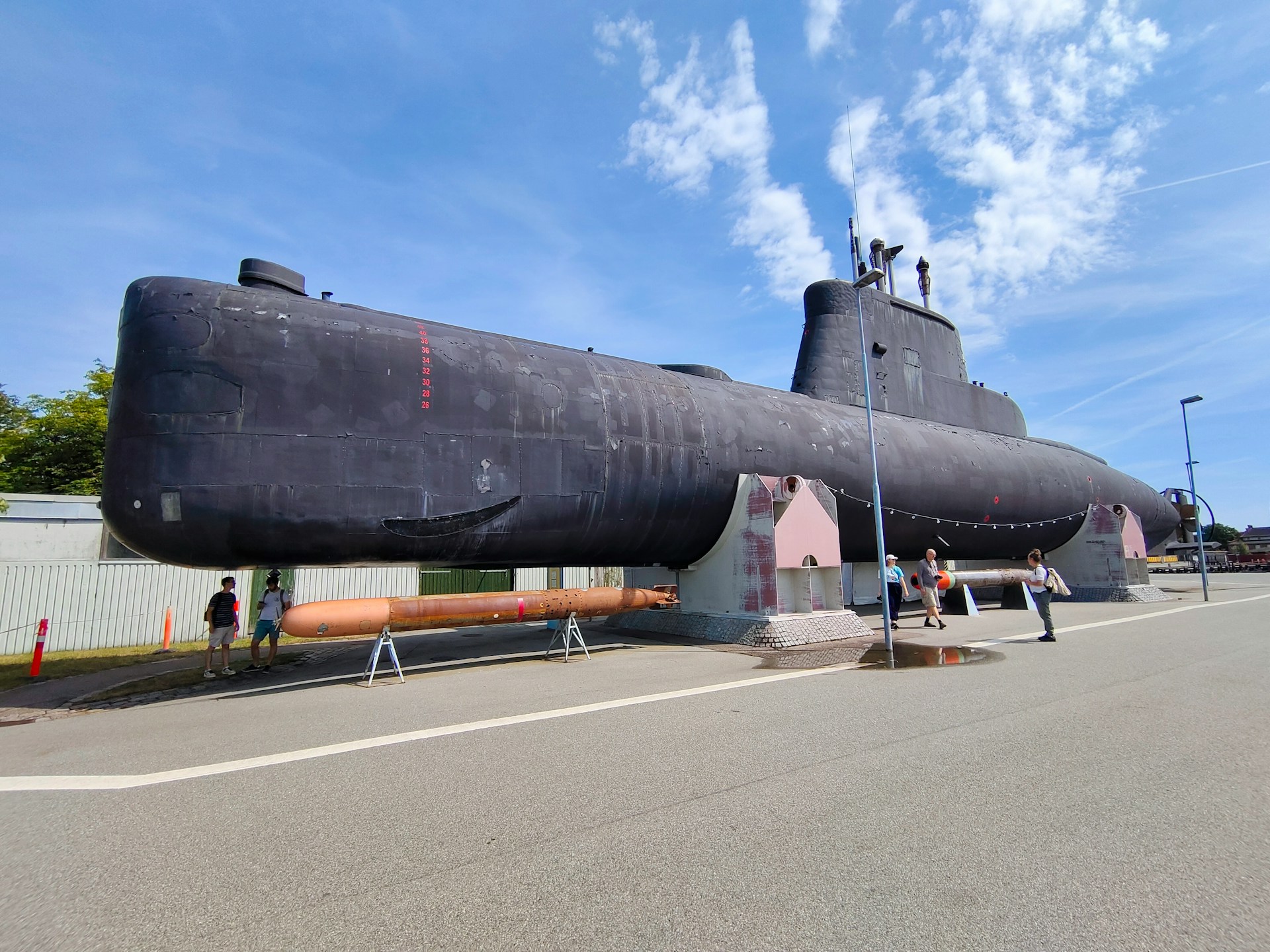

Lesley Frame, assistant professor of materials science and engineering at the University of Connecticut, is leading a collaborative research effort that uses neutron-based analysis to better understand how welded joints in U.S. Navy nuclear submarine hulls behave under extreme operating conditions. Working with Oak Ridge National Laboratory, Electric Boat, and U.S. Navy partners, the team is examining how internal stresses develop during welding and how those stresses can contribute to long-term cracking in critical structural materials.
Boisvert, P. L. (2026). Neutrons dive deep to help protect U.S. nuclear submarines. TechXplore. https://techxplore.com/news/2026-01-neutrons-deep-nuclear-submarines.html
Nuclear-powered submarines operate at depths where external water pressure places enormous demands on the integrity of the pressure hull. These hulls are constructed from large steel and alloy plates joined through highly controlled manual and robotic welding processes. Although strict quality standards are applied during fabrication, certain forms of cracking can still emerge over time, particularly in and around welded seams that experience intense thermal cycling during construction.
Lesley Frame, from University of Connecticut stated,
“Our study is the first to consider non-microstructural aspects of DDC, including residual stress, or internal distortions, caused by heat from the welding process.”
One of the key concerns addressed by the research is ductility dip cracking, a type of damage that can occur as welded metals cool and solidify. The cracking forms along grain boundaries in the material and may slowly propagate, weakening the joint even when advanced alloys are used. This issue remains a challenge in several materials used for naval applications, including copper-nickel alloys that are valued for their corrosion resistance and mechanical strength in marine environments.
To investigate these effects, the researchers are using neutron scattering techniques at the High Flux Isotope Reactor at Oak Ridge National Laboratory. Experiments are carried out with the High Intensity Diffractometer for Residual Stress Analysis, an instrument designed to measure internal strains deep within bulk materials. Because neutrons can penetrate thick metal sections, they allow scientists to study welded components nondestructively, capturing stress distributions that are inaccessible with surface-based methods.
The team is focusing on a copper-nickel alloy composed of roughly seventy percent copper and thirty percent nickel, a material commonly used in naval systems. By analyzing changes in atomic lattice spacing through neutron diffraction, the researchers can map how residual stresses are distributed throughout the weld and surrounding material. Neutron radiography is also used to detect density variations and internal features associated with weld defects.
These experimental measurements are being compared with computational models that simulate welding conditions and cooling behavior. By correlating stress maps with modeled welding parameters, the researchers aim to improve predictions of when ductility dip cracking is likely to occur. The results may help engineers adjust welding procedures to minimize cracking before components are placed into service.
The neutron-based work is complemented by X-ray measurements conducted at other national laboratories, allowing multiple techniques to be applied to the same materials. This combined approach helps clarify how heat input, material composition, and mechanical constraints interact during welding.
While the immediate focus is on submarine hulls, the findings have broader relevance for industries that rely on thick welded structures, including energy production, transportation, and heavy manufacturing. By improving understanding of how residual stresses develop and persist, the research supports efforts to design safer and more reliable structures for demanding operational environments.

Adrian graduated with a Masters Degree (1st Class Honours) in Chemical Engineering from Chester University along with Harris. His master’s research aimed to develop a standardadised clean water oxygenation transfer procedure to test bubble diffusers that are currently used in the wastewater industry commercial market. He has also undergone placments in both US and China primarely focused within the R&D department and is an associate member of the Institute of Chemical Engineers (IChemE).