
Led by Dr. Raimonda Kubiliūtė of the Faculty of Chemical Technology at Kaunas University of Technology, researchers in Lithuania are developing methods to convert textile waste into materials that strengthen cement and concrete. The work sits at the intersection of two industries with large environmental footprints and explores how waste streams from one sector can become functional inputs for another.
Kubiliute, R., & Siauciunas, R. (2025). Application of smectitic clay waste for limestone calcined clay cement production. Journal of Thermal Analysis and Calorimetry. https://doi.org/10.1007/s10973-025-14681-z
Textiles and construction together account for a substantial share of global material use, energy consumption, and waste generation. In Europe alone, billions of tons of waste are produced annually, prompting policy efforts to move away from linear consumption models toward a circular economy. While recycling pathways for materials such as metals and glass are relatively mature, textiles remain difficult to process at scale, particularly after consumer use.
Dr. Raimonda Kubiliūtė of the Faculty of Chemical Technology at Kaunas University of Technology stated,
“This technological solution not only reduces CO₂ emissions during cement production but also provides an innovative and environmentally friendly approach to textile waste management.”
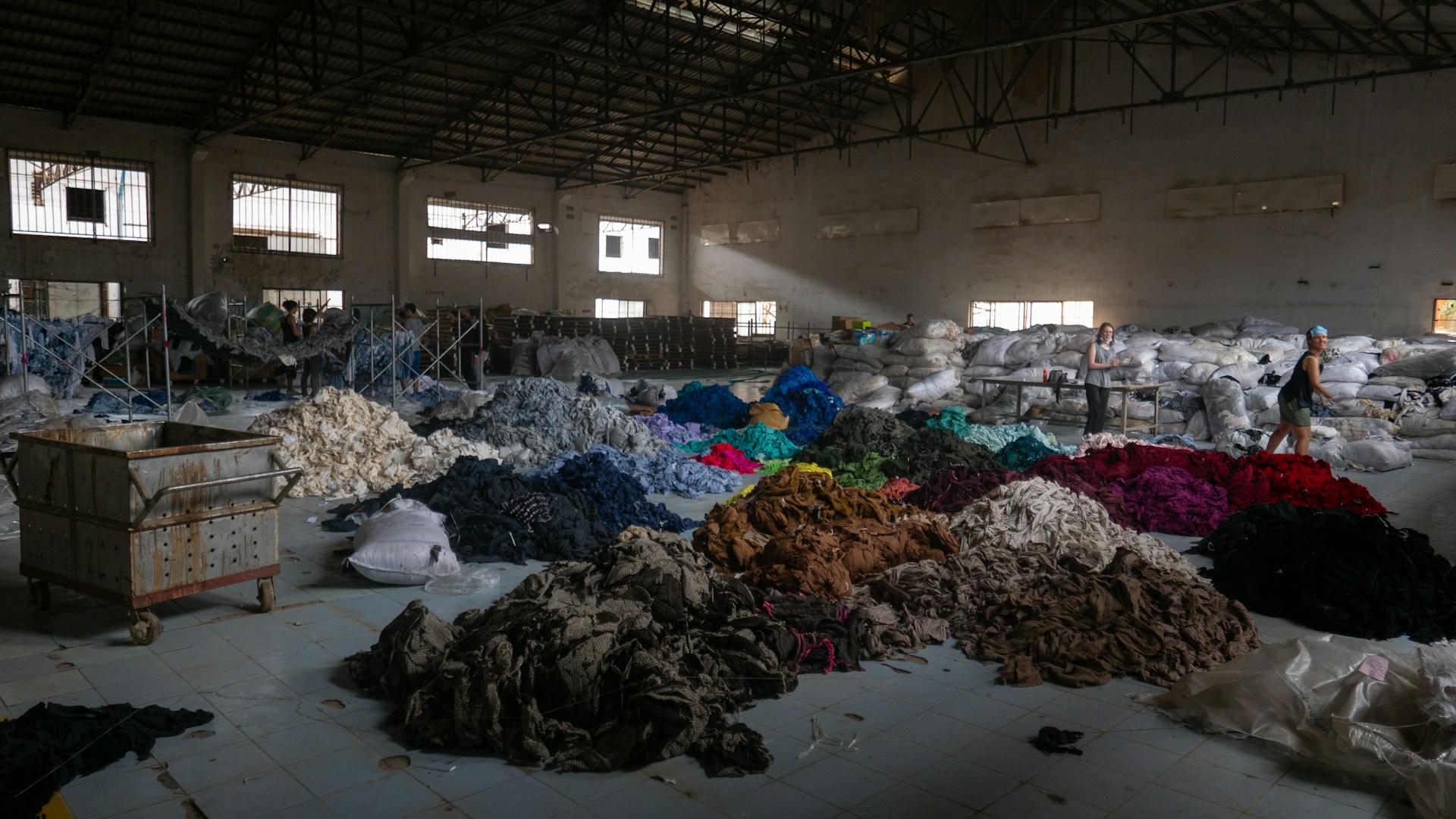
Most discarded clothing is currently landfilled or incinerated. Only a small fraction is collected separately, and even less is recycled into new fibers. Blended fabrics, chemical additives, and dyes complicate sorting and processing, while washing and mechanical treatment can release microplastics. As a result, recycled textiles are often downcycled into low-value products such as insulation, padding, or cleaning materials.
Researchers at Kaunas University of Technology are examining alternative routes that aim to extract higher value from textile waste. One approach involves thermal treatment of discarded textiles under controlled conditions. When heated at moderate temperatures in an inert environment, textile waste can be converted into carbon-rich granules with significant energy content. These materials may serve as alternative fuels, reducing dependence on fossil resources.
However, combustion of any fuel produces ash, and the properties of that ash depend on the original material. Rather than treating this residue as a disposal problem, the KTU team investigated whether textile-derived ash could be incorporated into cementitious systems.
Cement production, particularly clinker firing in rotary kilns, is a major source of carbon dioxide emissions due to both fuel combustion and chemical reactions inherent to the process. One strategy for reducing emissions is to replace part of ordinary Portland cement with supplementary materials that maintain or improve performance while lowering clinker content.
In laboratory studies, the researchers found that textile ash could replace up to 7.5 percent of conventional cement in certain mixtures. Under standard curing conditions, cement samples containing textile ash showed compressive strength increases of up to 16 percent compared with reference samples. These results suggest that the ash does more than act as an inert filler, instead contributing to the material’s microstructure and load-bearing capacity.
The research builds on broader efforts at KTU and elsewhere to use industrial byproducts as cement substitutes. Previous work by the team has examined calcined smectitic clay waste for use in limestone calcined clay cement systems, demonstrating that alternative mineral inputs can achieve competitive mechanical properties while reducing environmental impact.
In addition to ash, the researchers have explored the use of fibers recovered from discarded textiles. Initial findings indicate that adding small amounts of recycled polyester fibers to concrete mixtures can increase compressive strength by 15 to 20 percent and improve resistance to freeze–thaw cycles. Such improvements are particularly relevant for infrastructure exposed to variable climates.
According to Dr. Kubiliūtė, the variability of textile waste presents both a challenge and an opportunity. Different fibers, treatments, and additives lead to ash with distinct chemical compositions, which means performance must be evaluated carefully for each application. At the same time, this diversity allows tailoring of materials for specific engineering requirements.
While industrial-scale deployment of textile-derived fuels and cement additives is still at an early stage, interest in the approach is growing. Integrating textile waste into cement production could reduce landfill use, lower emissions from both sectors, and create new value chains within a circular economy framework.
The research highlights a broader shift in materials engineering, where waste streams are increasingly viewed as resources rather than liabilities. By applying chemical analysis, thermal processing, and mechanical testing, engineers are redefining how materials move through industrial systems. In the case of textile ash, what was once a disposal problem may become part of the solution for producing stronger, more sustainable construction materials.

Adrian graduated with a Masters Degree (1st Class Honours) in Chemical Engineering from Chester University along with Harris. His master’s research aimed to develop a standardadised clean water oxygenation transfer procedure to test bubble diffusers that are currently used in the wastewater industry commercial market. He has also undergone placments in both US and China primarely focused within the R&D department and is an associate member of the Institute of Chemical Engineers (IChemE).