
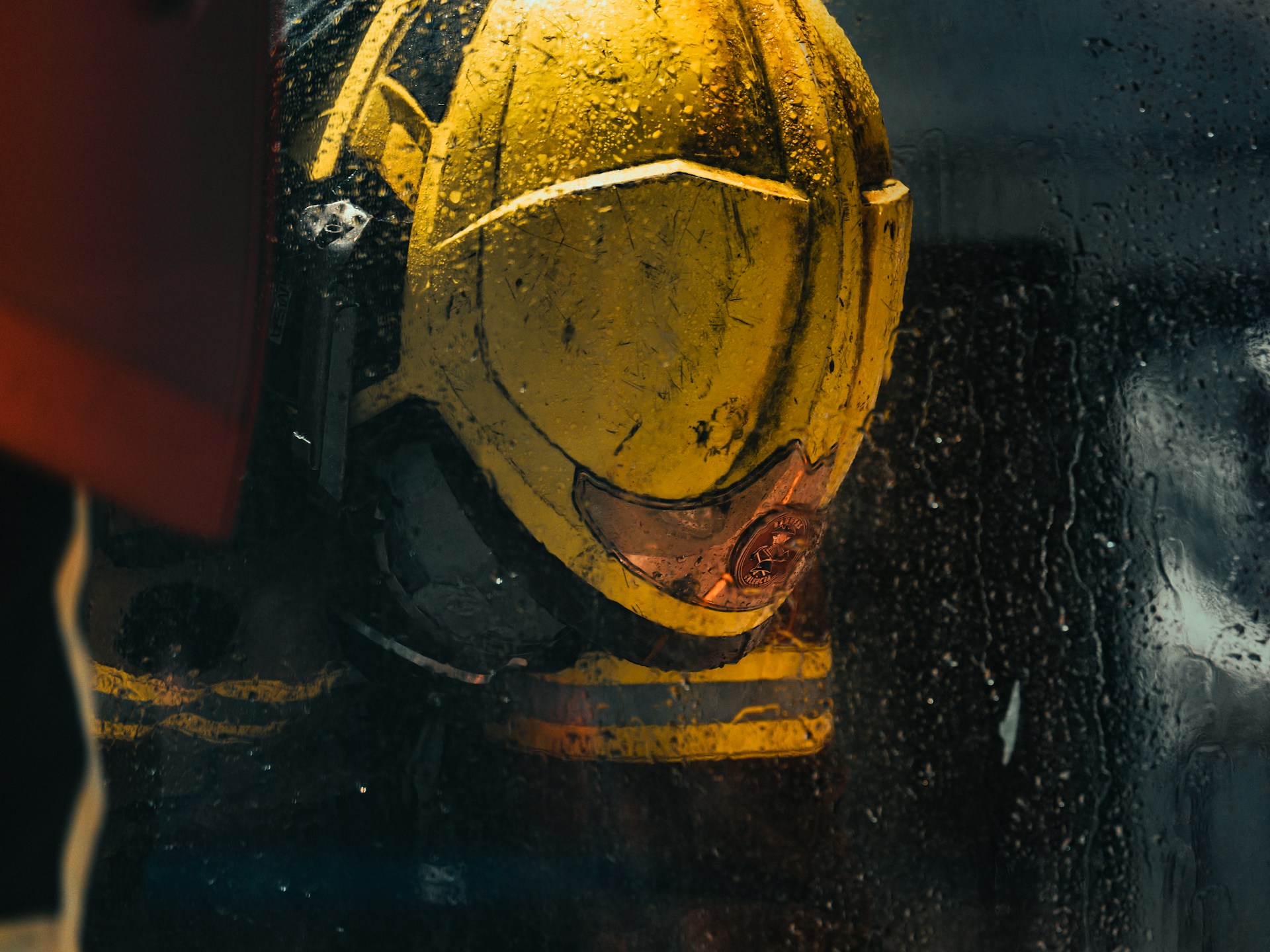

Alberto Caban-Martinez, Ph.D., D.O., M.P.H., deputy director and investigator at the Sylvester Comprehensive Cancer Center’s Firefighter Cancer Initiative at the University of Miami Leonard M. Miller School of Medicine, is the lead researcher behind a new study examining hidden chemical exposure on firefighter protective equipment. The research introduces a simple wipe test that can detect per- and polyfluoroalkyl substances (PFAS) lingering on turnout gear and breathing apparatus long after firefighting activities have ended.
Hernandez-Fajardo, C. A., de Navarro, M. G., Ogunbiyi, O. D., Louzado-Feliciano, P., Schaefer Solle, N., Kobetz, E., Caban-Martinez, A. J., & Quinete, N. (2026). Non-destructive surface sampling of PFAS exposure on firefighter protective gears: Potential implications for occupational exposure. Journal of Hazardous Materials, 501, 140633. https://doi.org/10.1016/j.jhazmat.2025.140633
PFAS are a class of heat-resistant chemicals widely used in firefighting foams and protective coatings. Their stability under extreme conditions also makes them persistent in the environment and within the human body. Numerous studies have linked PFAS exposure to increased risks of several cancers, as well as hormonal and immune system disruption. Firefighters are considered particularly vulnerable due to repeated exposure during emergency responses and continued contact with contaminated gear in stations and vehicles.
Alberto Caban-Martinez from University of Miami Leonard M. Miller School of Medicine stated,
“With tools like this, firefighters can battle the unseen blaze, and we can help extinguish cancer in our first responders”.
The study focused on whether PFAS contamination could be identified in a way that was both practical and non-destructive. Using damp polypropylene wipes, the research team swabbed high-contact areas of turnout jackets, pants, and self-contained breathing apparatus masks. The samples were then analyzed using mass spectrometry to determine the type and concentration of PFAS present on the surfaces.
PFAS were detected on every piece of equipment tested. In some cases, concentrations reached hundreds of nanograms per gram. One of the most frequently identified compounds was 6:2 fluorotelomer sulfonate, a chemical commonly associated with firefighting foams. Of particular concern was the presence of PFAS residues inside breathing masks, areas generally assumed to remain isolated from external contaminants.
These findings suggest that firefighter gear can act as a continuing source of exposure after an incident. PFAS residues may transfer from equipment to skin, vehicles, and fire station environments, contributing to cumulative exposure over time. This observation is consistent with broader occupational health research showing that modern fires, which involve large amounts of synthetic materials, leave behind complex chemical residues that adhere to protective textiles.
To better understand potential health implications, the researchers used physiologically based toxicokinetic modeling to estimate how surface contamination could translate into internal exposure. While the contribution from a single event may be limited, repeated contact over the course of a career could meaningfully increase long-term risk. These results align with existing epidemiological evidence linking firefighting to elevated cancer incidence.
A key strength of the wipe test is its practicality. The method is inexpensive, quick, and does not damage equipment, making it suitable for routine use by fire departments. It can help guide decisions on when gear should be cleaned, isolated, or subjected to deeper decontamination, particularly following incidents involving heavy foam use or prolonged smoke exposure.
The research also reflects a broader cultural shift within the fire service, where visible soot is increasingly recognized as a health hazard rather than a symbol of experience. Initiatives such as Sylvester’s Firefighter Cancer Initiative have promoted changes in training, decontamination practices, and health screening, supported by growing policy recognition of occupational cancer risks.
From an engineering and occupational safety perspective, the wipe test provides a direct link between laboratory analysis and field decision making. By making invisible contamination measurable, it enables departments to move from assumption-based practices to data-driven risk management. As additional studies build on this approach, routine surface testing could become an important component of firefighter health and safety strategies, helping to address chemical exposures that persist long after the fire is out.

Adrian graduated with a Masters Degree (1st Class Honours) in Chemical Engineering from Chester University along with Harris. His master’s research aimed to develop a standardadised clean water oxygenation transfer procedure to test bubble diffusers that are currently used in the wastewater industry commercial market. He has also undergone placments in both US and China primarely focused within the R&D department and is an associate member of the Institute of Chemical Engineers (IChemE).