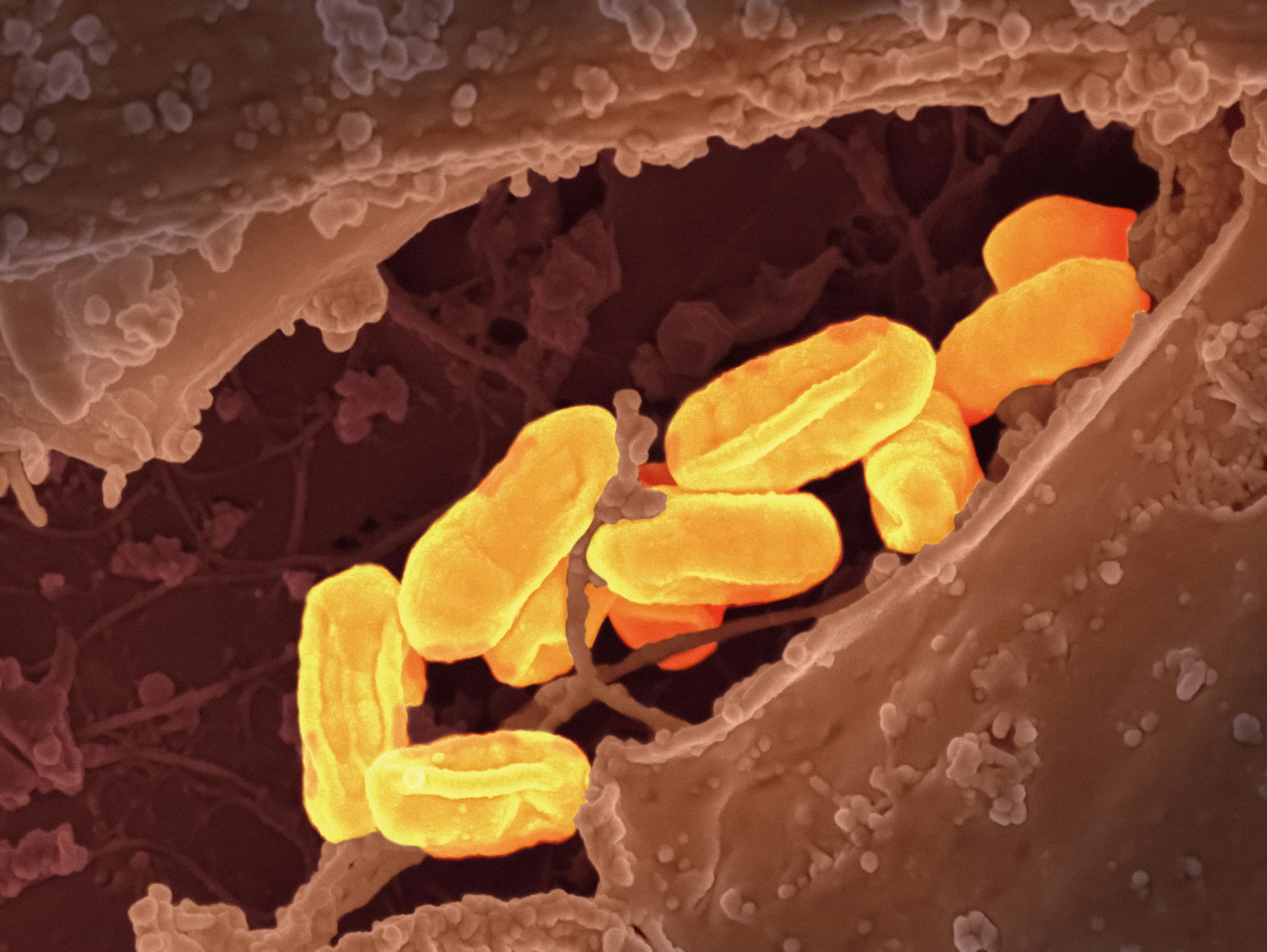

At Martin Luther University Halle-Wittenberg, Adrian Richter and his collaborators have been working on new ways to inhibit tuberculosis bacteria at their most fundamental point of vulnerability: energy production. Their latest study reports a compound that targets the ATP synthase of Mycobacterium tuberculosis at a binding site distinct from those used by existing drugs. The approach reflects a growing interest in developing next-generation inhibitors that remain effective even as resistance to current treatments increases.
Palme, P. R., Grover, S., Abdelaziz, R., Mann, L., Kany, A. M., Ouologuem, L., Bartel, K., Sonnenkalb, L., Reiling, N., Hirsch, A. K. H., Schnappinger, D., Rubinstein, J. L., Imming, P., & Richter, A. (2025). Design, Synthesis, and Biological Evaluation of Mono- and Diamino-Substituted Squaramide Derivatives as Potent Inhibitors of Mycobacterial Adenosine Triphosphate (ATP) Synthase. Journal of Medicinal Chemistry. https://doi.org/10.1021/acs.jmedchem.5c02284
Tuberculosis continues to be a major global health burden. According to recent World Health Organization data, nearly eight million new infections and over one million deaths were recorded in 2024. The disease is driven by slow-growing bacteria that can persist for long periods in the lungs unless treated with combinations of antimicrobials. Among the newer additions to treatment regimens is bedaquiline, which interferes with the bacterial ATP synthase, a rotary enzyme that generates cellular energy. Although bedaquiline has been an important tool since its approval in 2012, reports of emerging resistance have been steadily increasing, particularly in settings with inconsistent or incomplete treatment courses.
Adrian Richter from Martin Luther University Halle-Wittenberg stated,
“Our tests show that, even though the effects are not as strong as they are for tuberculosis bacteria, attacking the ATP synthase of mycobacteria is a generally promising approach that we will continue to pursue”.
Richter’s group and its international partners focused on a class of molecules called squaric acid amides. These compounds, identifiable by their square-shaped core, have been explored in antimicrobial and anticancer drug research for more than a decade. However, many early derivatives were unsuitable for therapeutic use due to metabolic instability or toxicity. The team sought to refine these structures through systematic variation of substituents, aiming to produce analogues that retain inhibitory power but avoid the liabilities seen previously.
Among the many tested candidates, one molecule — identified as PRP020 — showed a combination of properties that made it stand out. Laboratory studies using cultured tuberculosis bacteria and isolated ATP synthase revealed that PRP020 inhibits the enzyme effectively while binding to a different region than bedaquiline. This distinction is important: inhibitors that interact with alternate sites can retain activity when mutations alter the usual drug-binding pocket. Results from additional tests indicated that PRP020 was not toxic to mammalian cells and was only slowly metabolized by liver enzymes, suggesting it could maintain active concentrations in vivo.
Interest in alternative ATP synthase inhibitors has increased across the TB research community. Several studies in recent years have examined new binding pockets on the enzyme, including the Fo region and peripheral stalk. PRP020 contributes to this broader effort by demonstrating that squaric acid amide scaffolds can be shaped into molecules that interact with these less-explored areas. Such compounds could complement existing therapies rather than replace them outright, forming part of multi-drug regimens that reduce the risk of resistance.
The work also extends beyond tuberculosis. In additional tests, the compound showed some activity against Mycobacterium avium, an organism that commonly infects the lungs of people with cystic fibrosis and is difficult to treat with current antibiotics. While PRP020’s effect on M. avium was weaker than on M. tuberculosis, the findings suggest that ATP synthase inhibition could remain a feasible strategy across multiple mycobacterial species.
Moving forward, the researchers intend to evaluate PRP020 in animal models to understand how the compound behaves in a whole organism. Pharmacokinetic studies, toxicity assessments and efficacy tests in infected animals will be necessary before any clinical development can take place. Richter notes that although the results so far are encouraging, the transition from laboratory hit to medicine is a lengthy process requiring industrial-scale development.
The study highlights how revisiting older chemical scaffolds with refined synthetic strategies can lead to potential solutions for pressing infectious-disease challenges. As tuberculosis continues to evolve resistance to core therapies, compounds such as PRP020 offer researchers another angle for interrupting bacterial energy production, a mechanism that remains central to the organism’s survival.

Adrian graduated with a Masters Degree (1st Class Honours) in Chemical Engineering from Chester University along with Harris. His master’s research aimed to develop a standardadised clean water oxygenation transfer procedure to test bubble diffusers that are currently used in the wastewater industry commercial market. He has also undergone placments in both US and China primarely focused within the R&D department and is an associate member of the Institute of Chemical Engineers (IChemE).