
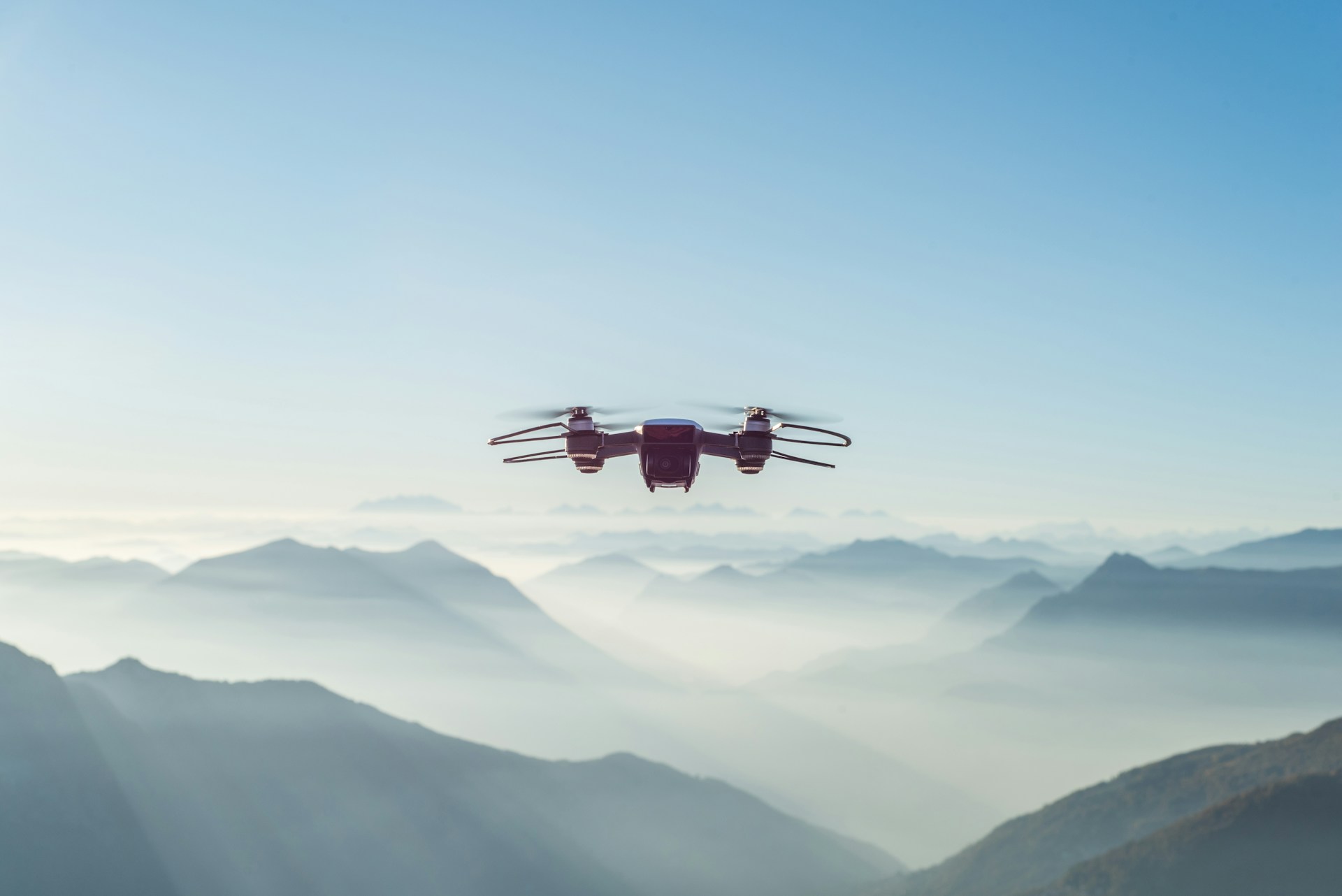

Research led by Ibrahim Abaker Hashem of the University of Sharjah suggests that unmanned aerial systems are approaching a level of technical maturity that could make them a routine part of disaster response, health care logistics, environmental monitoring, and large-scale agriculture. The work, produced in collaboration with researchers from Université Constantine 2 in Algeria and Taylor’s University in Malaysia, draws on multiple recent studies to examine how drones are shifting from experimental tools to operational systems used in real-world conditions.
Hashem, I. A., Zerdoumi, S., Jhanjhi, N., Siddiqa, A., & Foufou, S. (2026). Optimization and performance analysis of Drones and Unmanned Aerial Systems and Their Intelligence Applications. International Journal of Cognitive Computing in Engineering, 7, 128–144. https://doi.org/10.1016/j.ijcce.2025.10.004
Rather than focusing on a single technological advance, the study reviews progress across autonomous navigation, sensing, and optimization. Over the past decade, drones have been tested in wildfire assessment, flood mapping, and post-earthquake search operations, but their effectiveness was often constrained by short flight times and heavy reliance on human pilots. The researchers argue that these limitations are now being addressed through advances in artificial intelligence and onboard computing, allowing drones to operate with a higher degree of autonomy.
Ibrahim Abaker Hashem of the University of Sharjah stated,
“Drones will become more adept at perceiving their surroundings as sensor technology advances, such as LiDAR, multispectral cameras, and sophisticated IMUs, making drones useful tools for mapping, surveying, and agriculture.”
Modern drone platforms increasingly combine LiDAR, multispectral cameras, inertial measurement units, and satellite navigation to interpret their surroundings. The study evaluates mathematical models that support this autonomy, particularly optimization-based path loss models that account for terrain, vegetation, and urban structures. These models aim to help drones select flight paths that reduce energy consumption while maintaining reliable communication, a persistent challenge during large-scale emergency deployments.
The analysis compares a range of optimization methods, including genetic algorithms, particle swarm optimization, colony-based techniques, and reinforcement learning. Each approach offers different trade-offs in terms of computational demand, adaptability, and performance in dynamic environments. According to the authors, no single method is universally optimal, but comparative evaluation helps engineers select models suited to specific missions such as wide-area surveillance or long-duration delivery.
Disaster response remains one of the most immediate areas of application. Field reports from emergency agencies indicate that drones equipped with thermal and optical sensors can assist in locating survivors and assessing structural damage more quickly than ground-based teams alone. Fixed-wing drones, in particular, are being evaluated for rapid mapping over large regions following hurricanes or floods, where access by road may be limited.
Health care delivery is another domain showing steady progress. Trials involving the transport of medical supplies, blood products, and vaccines highlight the importance of endurance and predictable flight behavior. The study notes that improvements in battery efficiency and energy-aware routing are gradually extending operational range, making routine medical logistics more practical in remote or underserved areas.
Beyond emergency and health applications, the same technologies are being applied to environmental monitoring and agriculture. Multispectral imaging allows farmers to detect crop stress and irrigation problems earlier than traditional methods, while conservation researchers are using drones for wildlife surveys and habitat mapping. At the same time, the authors acknowledge concerns about noise, wildlife disturbance, and the environmental impact of battery production and disposal.
The study also emphasizes the need for stronger regulatory and ethical frameworks. As drone use expands, issues such as airspace management, privacy, and security become more complex. High-resolution sensors and autonomous operation raise questions about data collection and consent, while increased drone traffic heightens the need for counter-drone measures to prevent misuse.
A central contribution of the research is its attempt to link theoretical navigation models with practical deployment. By evaluating models under realistic constraints, the work provides guidance for engineers designing drones intended for field use rather than laboratory testing. The authors anticipate that future development will favor specialized platforms designed for specific tasks, supported by continued improvements in energy efficiency, communication networks, and system reliability.
Overall, the findings suggest that progress in drone technology is incremental but cumulative. Longer flight times, improved autonomy, and better integration with digital infrastructure are steadily moving drones toward broader adoption. The challenge ahead lies in ensuring that technical capability is matched by appropriate regulation, ethical standards, and environmental consideration as drones become more embedded in public and industrial systems.

Adrian graduated with a Masters Degree (1st Class Honours) in Chemical Engineering from Chester University along with Harris. His master’s research aimed to develop a standardadised clean water oxygenation transfer procedure to test bubble diffusers that are currently used in the wastewater industry commercial market. He has also undergone placments in both US and China primarely focused within the R&D department and is an associate member of the Institute of Chemical Engineers (IChemE).