
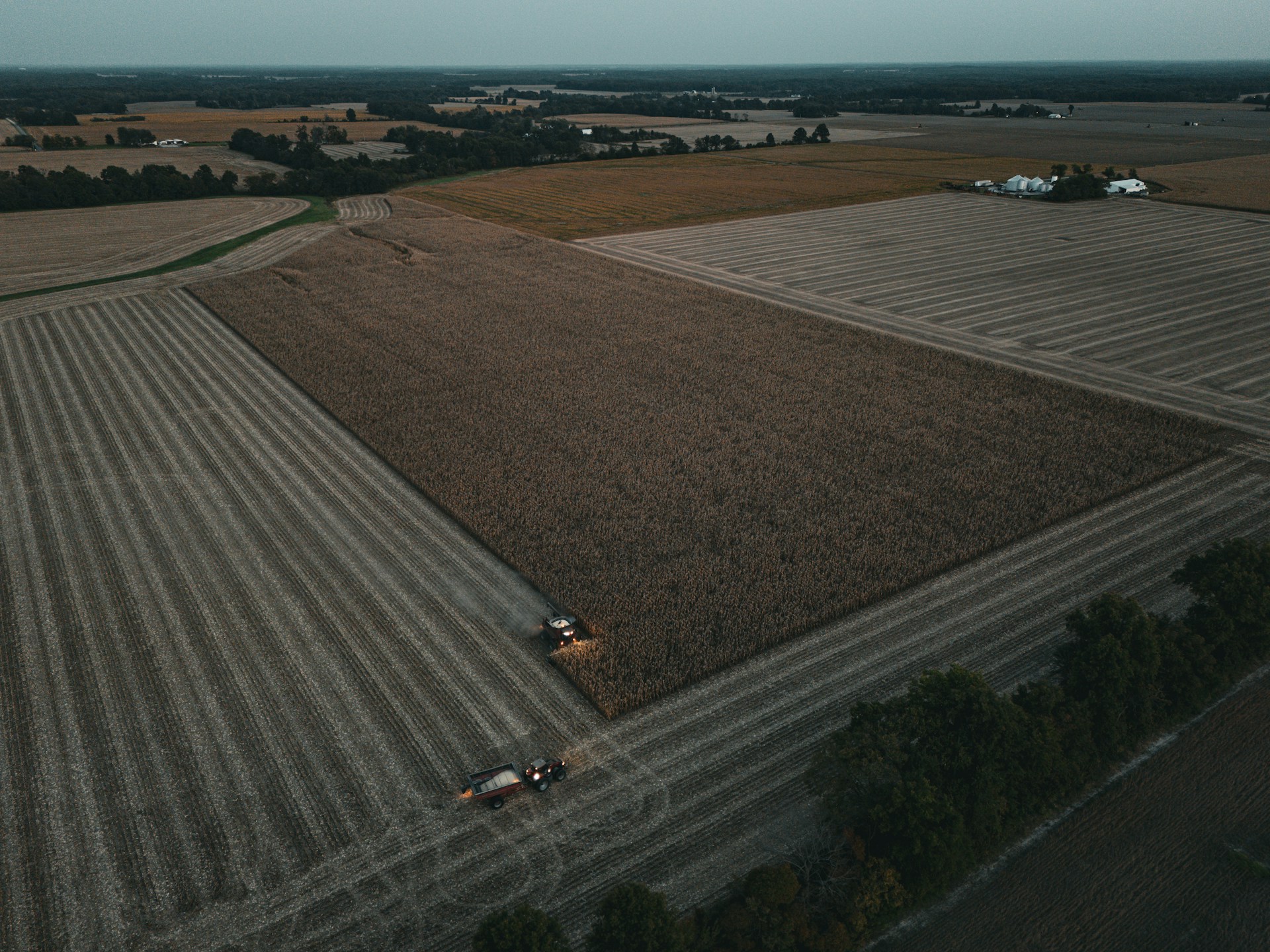

Planted between cash crops during the winter months, cover crops have long been promoted as a way to protect soil, reduce erosion, and improve water and nutrient retention. Led by Zobaer Ahmed, Ph.D., when he was a senior research assistant at the University of Arkansas Center for Advanced Spatial ResearchNew research from the University of Arkansas shows that farmers in the state are increasingly adopting this practice on their own, without relying on government subsidies. Using satellite imagery and agricultural data, researchers found that voluntary winter cover crop adoption in Arkansas increased by about 5% over the study period, signaling a gradual but meaningful shift in farm management decisions.
Ahmed, Z., Connor, L., Brye, K., Green, V. S., Popp, M., Shew, A., & Nalley, L. L. (2025). Satellite Remote Sensing Reveals Voluntary Cover-Crop Adoption and Crop-Rotation Hotspots in the Mississippi Alluvial Plain. PLOS One, 20(10), e0331797. https://doi.org/10.1371/journal.pone.0331797
The study was led by agricultural economists and soil scientists from the Arkansas Agricultural Experiment Station, the research arm of the University of Arkansas System Division of Agriculture, with Lanier Nalley serving as corresponding author. The team analyzed data from 2013 to 2019 across parts of 27 counties in the Arkansas Delta, a region dominated by row crop agriculture. Their goal was not just to estimate how many acres were planted with cover crops, but to understand where they were being used, which cash crops they were paired with, and how voluntary adoption compared with subsidized programs.
Zobaer Ahmed, Ph.D., from University of Arkansas stated,
"The initial push was finding out what cash crops were associated with cover crops. But Zobaer is so good at this kind of work, I said, 'Well, if we know how many acres of cover crops are in a county that are government-subsidized, let's just find out how many total acres of cover crops are in a county, and the difference would be those people who aren't getting government payments for it.'"
Cover crops such as clover, rye, and oats are typically planted after harvest and terminated before the next growing season. Research from Arkansas and other agricultural regions has shown that these crops can reduce soil erosion, suppress weeds, limit nutrient runoff, and improve overall soil structure. Despite these benefits, adoption in the southern United States has historically lagged behind other regions, in part due to climate conditions, crop rotations, and economic uncertainty.
What distinguishes this study is its focus on voluntary adoption. Government data from the USDA Natural Resources Conservation Service makes it relatively easy to identify acres planted with cover crops under incentive programs, but farmers who plant cover crops without subsidies are much harder to track. To address this gap, the researchers combined NRCS records with satellite-based remote sensing, allowing them to estimate total cover crop acreage and infer voluntary use by subtracting subsidized acres.
The analysis showed that voluntary and subsidized adoption tended to rise together, suggesting a positive relationship rather than a tradeoff. One explanation is that some farmers initially adopt cover crops through government programs and later continue the practice independently, avoiding the administrative burden tied to subsidies. Another factor may be local spillover effects, where farmers adopt cover crops after observing the results on neighboring fields.
Crop rotation patterns played a central role in the findings. The strongest association with winter cover crop use was observed in soybean-to-soybean rotations, which are common in Arkansas. Soybeans are a major economic driver in the state, generating billions of dollars in annual farm receipts. Over the study period, the share of soybean acreage planted before or after winter cover crops increased, while corn and cotton also showed smaller but steady gains. These patterns suggest that cover crops are being integrated where farmers see compatibility with existing rotations rather than as a wholesale change in production systems.
From an engineering and data perspective, the study relied on a combination of NASA Landsat 8 satellite imagery, Google Earth Engine processing, and machine learning classification. Landsat’s 30-meter spatial resolution and 16-day revisit cycle allowed researchers to identify vegetative ground cover during winter months from November through March. Multiple spectral bands and vegetation indices were used to distinguish cover crops from bare soil or crop residue, while cloud cover and data noise were filtered out. To protect farmer privacy, results were aggregated at the county level rather than mapped to individual fields.
The findings help address a long-standing data gap in agricultural policy and planning. Simply knowing how many acres are planted with cover crops offers limited insight into their effectiveness or long-term viability. By linking cover crop use to specific rotations and regions, the research provides a clearer picture of where incentives, technical assistance, or outreach might be most effective.
More broadly, the results suggest that a growing number of farmers are choosing cover crops based on perceived agronomic or economic value rather than compliance with subsidy programs alone. For researchers and policymakers, this trend points toward increasing acceptance of cover crops as a standard management tool in Arkansas agriculture, supported by both environmental considerations and on-farm decision making.

Adrian graduated with a Masters Degree (1st Class Honours) in Chemical Engineering from Chester University along with Harris. His master’s research aimed to develop a standardadised clean water oxygenation transfer procedure to test bubble diffusers that are currently used in the wastewater industry commercial market. He has also undergone placments in both US and China primarely focused within the R&D department and is an associate member of the Institute of Chemical Engineers (IChemE).