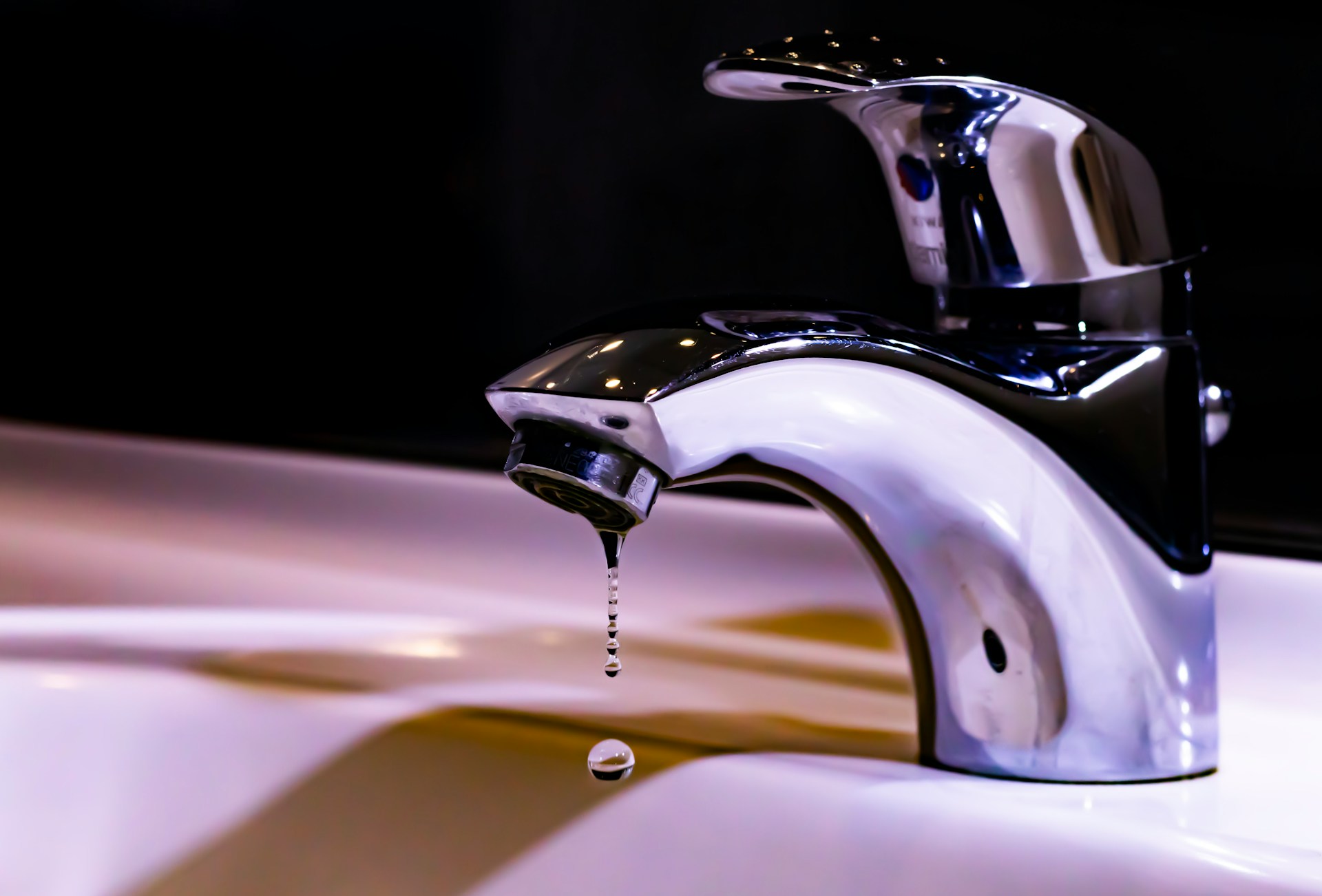

A team led by Dr. Stefan Kooij at the University of Amsterdam has taken a closer look at a familiar everyday observation: the moment when a smooth stream of water from a faucet transitions into individual droplets. Although this behaviour has been studied for nearly two centuries, the group revisited the problem with modern imaging tools and a wider range of flow conditions. Their findings show that the process is set in motion by disturbances far smaller than previously assumed, originating not from the external environment but from intrinsic fluctuations in the liquid itself.
Kooij, S., Jordan, D. T. A., van Rijn, C. J. M., Ribe, N. M., & Bonn, D. (2025). What Determines the Breakup Length of a Jet? Physical Review Letters, 135(21), 214001. https://doi.org/10.1103/jf6w-l5sy
The classical view attributes the breakup of laminar liquid jets to imperfections in the nozzle, small vibrations, or other forms of ambient disturbance. These external factors were assumed to seed the Rayleigh–Plateau instability, the well-known mechanism through which a cylindrical jet becomes unstable and eventually fragments into droplets. Dr. Kooij and his colleagues questioned whether this picture was complete. Their experiments combined high-resolution imaging, controlled-flow microjets, and systematic variations in viscosity, surface tension, and nozzle geometry. Comparable studies from groups working in microfluidics and inkjet design have also suggested that intrinsic thermal effects may play a larger role than previously recognised, especially at the smallest scales.
The Amsterdam team’s measurements pointed toward thermal capillary waves as the primary source of the disturbances that grow into full jet breakup. These waves occur at the angstrom scale, representing surface fluctuations only a few atomic widths in height. Their origin is similar to the random molecular motion that produces Brownian motion in suspended particles. When these thermal oscillations appear on the surface of a water jet, the Rayleigh–Plateau instability amplifies them until they become macroscopic and the stream divides into droplets. According to the researchers, this process persists regardless of attempts to eliminate noise from the experimental environment.
To test this idea, the team measured breakup lengths across many configurations, comparing the observed values with predictions from a theoretical model driven solely by thermal noise. They found strong agreement across a range spanning from nanojets to the millimetre-scale jets typical of faucets and industrial dispensers. This scale independence supports the conclusion that thermal fluctuations dictate the breakup length even when external disturbances are minimal. Similar patterns were reported in earlier small-scale studies in nanofluidic jet formation, but this work demonstrates the same behaviour across seven orders of magnitude, bringing different strands of research into alignment.
The results challenge the long-standing assumption that environmental noise is the dominant trigger for droplet formation in liquid jets. Instead, the authors argue that thermal capillary waves provide a universal baseline disturbance present in all liquids, and that practical systems simply amplify what is already intrinsic to the material. This insight is valuable for fields that rely on controlled droplet production, such as inkjet printing, aerosol drug delivery, agricultural spraying, and food processing. It also contributes to a more unified understanding of how microscopic fluctuations influence macroscopic flow behaviour.
By reframing jet breakup as a phenomenon driven by internal thermal noise rather than external imperfections, the study provides a foundation for more predictable modelling across scientific and engineering applications. For everyday observations, the explanation is straightforward: even when a faucet is perfectly steady, the water itself carries enough natural fluctuation to determine when the stream will separate into droplets.

Adrian graduated with a Masters Degree (1st Class Honours) in Chemical Engineering from Chester University along with Harris. His master’s research aimed to develop a standardadised clean water oxygenation transfer procedure to test bubble diffusers that are currently used in the wastewater industry commercial market. He has also undergone placments in both US and China primarely focused within the R&D department and is an associate member of the Institute of Chemical Engineers (IChemE).