
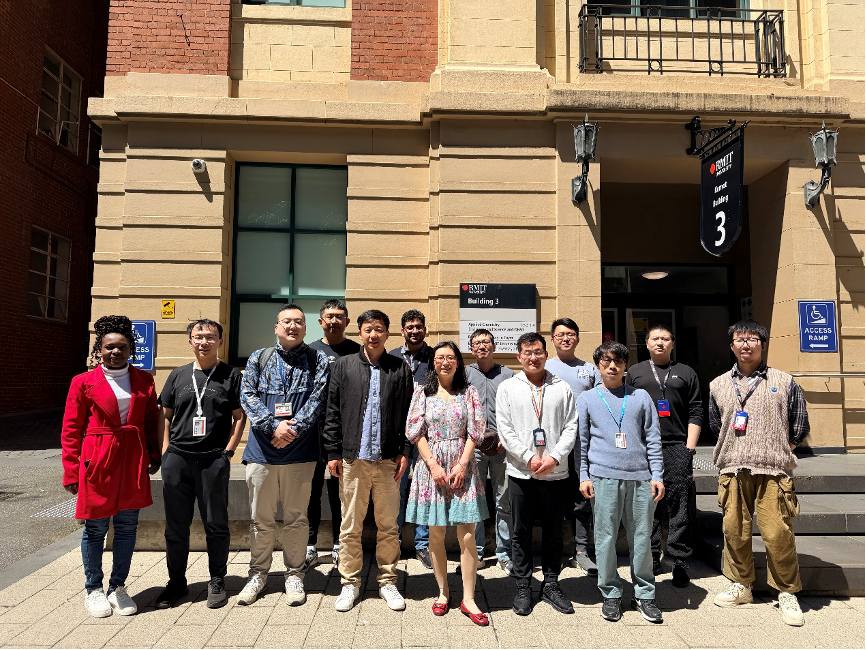
Researchers at RMIT University have developed an ultrathin boron nitride–aramid nanofiber (BN–ANF) composite membrane that combines exceptional solvent stability with unusually high permeation rates, addressing a trade-off in organic solvent nanofiltration. In our earlier report, we covered how this mixed-dimensional architecture overcomes the brittleness and hydrophobicity that have historically limited boron nitride–based membranes. Now, we sat down with Prof. Weiwei Lei, Prof. Dan Liu, and lead contributor Yuxi Ma to explore the scientific motivations behind the BN–ANF platform, the membrane fabrication strategy, and the performance benchmarks that position this system as a promising candidate for energy-efficient chemical recovery and recycling.
You can see the full research paper here:
Ma, Y., You, Y., Wang, L., Yang, G., Qin, S., Su, Y., ... & Lei, W. (2025). Thin Film ANF/BN Composite Membranes for Efficient Organic Solvent Nanofiltration. Journal of Membrane Science, 124540.
Other representative articles from our group in related research areas:
Yang, G., Wang, L., Ma, Y., Yang, T., Han, Q., Chen, J., ... & Liu, D. (2025). Light-Induced Ion Transport and Energy Harvesting through Aramid Nanofiber-Functionalized Indium Selenide Nanochannels. ACS Sustainable Chemistry & Engineering, 13(38), 15839-15846.
Wang, L., Liu, D., Jiang, L., Ma, Y., Yang, G., Qian, Y., & Lei, W. (2022). Advanced 2D–2D heterostructures of transition metal dichalcogenides and nitrogen-rich nitrides for solar water generation. Nano Energy, 98, 107192.
Wang, Z., Zhang, P., Zhang, J., Tang, K., Cao, J., Yang, Z., Qin, S., Razal, J. M., Lei, W., Liu, D. (2024) Dendrite-Free Zinc Deposition Enabled by Mxene/Nylon Scaffold and Polydopamine Solid-Electrolyte Interphase for Flexible Zinc-Ion Batteries. Energy Storage Mater, 67, 103298.
Laghaei, M., Ghasemian, M., Lei, W., Kong, L., & Chao, Q. (2023). A review of boron nitride-based photocatalysts for carbon dioxide reduction. Journal of Materials Chemistry A, 11(23), 11925-11963.
The interview also draws on the broader expertise of the RMIT team working across nanofluidics, photothermal materials, and BN scale-up, offering insight into how fundamental materials design translates into industrially relevant separation technologies. The primary research article discussed here—Thin Film ANF/BN Composite Membranes for Efficient Organic Solvent Nanofiltration—is available in the Journal of Membrane Science, alongside several related publications from the group.
The following interview is presented unedited to preserve the authors’ original responses and provide an unfiltered view of how the BN–ANF membranes were conceived, fabricated, characterised, and benchmarked, as well as how the team is addressing scale-up and real-world integration challenges.
What motivated your team to choose boron nitride nanofibers (BNNF) as the foundation for ultrathin separation membranes, and how did you identify their suitability for rapid chemical recovery?
Our motivation to explore boron nitride nanofibers (BNNF) originates from more than a decade of work in BN materials led jointly by Prof. Weiwei Lei and Prof. Dan Liu, who serve as the co-leaders of our research program. Prof. Lei pioneered scalable ball-milling strategies that convert bulk BN into high-quality two-dimensional nanosheets, establishing BN as a robust platform for chemically stable membranes. In parallel, Prof. Dan’s expertise in interfacial chemistry and hybrid material design helped define BN’s potential for mixed-dimensional assemblies and solvent-resistant functional materials.
However, despite BN’s exceptional thermal and chemical durability, conventional BN nanosheets are hydrophobic and brittle, preventing their integration into large-area, water-processable membranes. Earlier studies from our group revealed BN’s promise for ultrafast molecular transport, but its fragility limited engineering translation.
This is where Mr. Yuxi Ma, now in the final year of his PhD and representing the new generation of core researchers in our team, made a decisive contribution. Building on the dual-PI foundation, he conceptualised and executed the mixed-dimensional BN–ANF strategy that overcame BN’s long-standing bottlenecks.
Could you walk us through your synthesis and membrane-fabrication process for producing the ultrathin BNNF filters; from nanofiber preparation and alignment to layering, stabilisation, and performance optimisation?
Our fabrication process for the ultrathin BN–ANF composite membranes integrates our long-term expertise in BN exfoliation with a highly controlled aqueous assembly workflow developed in our laboratory. The synthesis involves four key stages: nanofiber/nanosheet preparation, dispersion engineering, thin-film formation, and structural stabilisation.
1. Preparation of BN nanosheets and ANFs
We first produce few-layer boron nitride nanosheets (BNNS) through an optimised ball-milling exfoliation route. This process not only reduces the BN particle size but also introduces mild surface functionalisation that enhances hydrophilicity—crucial for uniform dispersion.
In parallel, aramid nanofibers (ANFs) are generated by dissolving Kevlar fibers in a DMSO/KOH system, yielding highly stable and negatively charged nanofibers with excellent mechanical strength.
2. Dispersion and interface engineering
The BNNS and ANFs are then co-dispersed in a controlled ratio. This step, designed and executed by Yuxi Ma, ensures strong interfacial interactions: ANFs form a flexible 1D scaffold while BNNS contribute rigidity, solvent resistance, and controlled pore structure. Achieving homogeneous mixing is a critical aspect of the process, enabling defect-suppressed thin-film formation.
3. Thin-film formation and layering
The composite dispersion is filtered through a microporous support membrane under vacuum. During filtration, the ANFs self-assemble into an interconnected fibrous network while BNNS align horizontally within the matrix. This produces an ultrathin mixed-dimensional film with controllable thickness (typically ~1.1–1.3 μm), smooth surface morphology, and consistent pore distribution.
A large part of the membrane’s reproducibility and defect suppression came from Yuxi’s systematic optimisation of dispersion rheology, fibre–nanosheet ratio, and filtration kinetics. These steps formed the methodological backbone that allowed the ultrathin BN–ANF layers to be assembled with sub-micron precision.
4. Stabilisation and structural optimisation
Post-treatment steps—including solvent exchange, mild thermal consolidation, and pressure preconditioning—are applied to stabilise the composite. These steps enhance mechanical robustness, reduce internal defects, and ensure structural integrity during solvent cycling.
Yuxi further implemented pressure-cycling tests and solvent-resistance optimisation, enabling the membranes to withstand pressures up to 10 bar and maintain performance over extended operation.
5. Performance optimisation and validation
Final optimisation involved tuning the BNNS content, adjusting film thickness, and engineering surface charge. The resulting membranes show:
- ethanol fluxes up to 164 L·m⁻²·h⁻¹ at 4 bar,
- high rejection of Evans Blue (92–96%),
- stable performance during long-term ethanol cycling,
- reversible deformation and excellent structural recovery.
This workflow transforms BN-based materials—previously limited by brittleness—into a mechanically reinforced, high-performance membrane platform suitable for organic-solvent nanofiltration and chemical-recovery applications.
Your study highlights exceptionally fast permeation rates and selective separation. How did you evaluate the membrane’s filtration efficiency, chemical compatibility, and mechanical robustness, and how did it compare with conventional polymer or ceramic filters?
To evaluate the membrane’s filtration performance, we used a stainless-steel stirred dead-end cell (STERLITECH)—essentially the industry’s standard small-area testing platform. It allows us to apply controlled pressure, measure permeance and rejection precisely, and isolate the intrinsic behaviour of our BN–ANF nanochannels from module-level effects.
1. Filtration efficiency — permeance and selectivity
Using the dead-end cell, we quantified solvent flux and solute rejection under 1–10 bar:
- 104 L·m⁻²·h⁻¹ at 1 bar (ethanol)
- 164 L·m⁻²·h⁻¹ at 4 bar
with Evans Blue dye rejection maintaining 92%-96%, indicating minimal pore expansion under pressure.
Multi-solvent evaluations (methanol, ethanol, acetone) further confirmed stable transport behaviour across solvents with different polarities and viscosities.
2. Chemical compatibility — solvent resistance & pore stability
Through solvent cycling and structural characterisation (SEM, FTIR, XRD):
- no swelling
- no pore deformation
- no delamination
- stable pore structure after long-term exposure
Compared with polymer membranes that swell or plasticize, BN–ANF remains structurally stable due to BN rigidity and ANF hydrogen-bond reinforcement.
3. Mechanical reliability — pressure cycling & tensile strength
We assessed mechanical robustness via:
- pressure cycling up to 10 bar, showing full recovery of flux and rejection
- tensile testing, confirming enhanced strength vs. BN-only films
- excellent resistance against compaction, a major weakness in 2D membranes
When benchmarked against conventional nanofiltration technologies, our hybrid BN–ANF membranes show a distinctly different performance profile. Compared with standard polymer NF membranes, they deliver significantly higher permeance in a wide range of organic solvents, exhibit negligible swelling, maintain structural integrity under pressure, and preserve rejection performance across varying operating conditions. Against ceramic membranes, our system offers comparable chemical robustness but at only about one-fiftieth to one-hundredth of the thickness. This ultrathin architecture results in much lower hydraulic resistance and higher energy efficiency, while the mechanical flexibility of the BN–ANF network makes integration into industrial modules far easier than rigid ceramic systems.
Since BNNF membranes maintain stability in harsh organic solvents, what characterisation techniques did you use to assess solvent resistance, swelling behaviour, and pore-structure retention, especially under repeated cycling?
To rigorously evaluate the solvent resistance and structural stability of the BN–ANF membranes, we combined long-term solvent cycling with multi-modal structural characterisation. Our goal was to determine whether the hybrid nanochannels maintain their architecture under harsh organic solvents and repeated operational stress.
1. Solvent cycling tests
The membranes were continuously exposed to methanol, ethanol and acetone under pressure-driven permeation for extended periods. Throughout these cycles, we monitored flux, rejection and mechanical appearance. The BN–ANF membranes showed:
• no flux decay,
• no colour change or surface deterioration,
• and full recovery after each solvent cycle.
This directly indicates resistance to solvent-induced softening or polymer relaxation — a common failure mode in polymer NF membranes.
2. Swelling behaviour — dimensional and morphological stability
We quantified swelling through a combination of:
• thickness measurements before and after solvent exposure,
• contact-angle and surface-energy analysis,
• and SEM imaging to capture nanoscale deformation.
Across all solvents, the thickness variation remained negligible and the surface morphology was unchanged, confirming the rigidity imparted by BN nanofibers and the hydrogen-bonding network of ANFs.
3. Pore-structure retention — verifying nanochannel integrity through mechanical response
Although direct pore-scale measurements (e.g., XRD or BET) are not applicable for these ultrathin composite films, we assessed pore-structure stability indirectly but reliably through mechanical response under pressure and performance recovery:
• Pressure-cycling tests (1–10 bar) showed that after each cycle, both the solvent flux and solute rejection returned to their original values. This behaviour indicates elastic deformation rather than permanent pore collapse or compaction.
• SEM imaging before and after cycling confirmed that the membrane surface and cross-section morphology remained intact, with no visible cracks, delamination, or densification.
• Stable flux–rejection profiles across solvents further demonstrated that the nanochannel size and connectivity are not altered by solvent penetration or mechanical loading.
The combined mechanical and performance data provide strong evidence that the BN–ANF hybrid network maintains reversible deformation, meaning that the nanochannels retain their structural integrity during operation. The rigid BN nanofibers prevent collapse, while the ANF hydrogen-bonding framework enables elastic recovery—together ensuring that the pore network remains robust under real-world operating conditions.
4. Overall stability profile
Compared with polymer membranes, which often swell or plasticize, our hybrid membranes maintained:
• fully retained pore architecture,
• stable nanochannels after cycling,
• and unchanged separation performance.
This level of stability is typically associated with ceramic membranes — but achieved here in a flexible, ultrathin organic–inorganic hybrid system.
Your ultrathin filters significantly reduce energy and solvent usage in chemical recycling. Could you elaborate on the process-intensification or sustainability metrics your team used to quantify these improvements?
Our current study focuses primarily on the materials and transport mechanisms of the BN–ANF membrane platform, so we have not yet carried out a full life-cycle or carbon-footprint assessment. However, several intrinsic performance metrics strongly suggest downstream process-intensification benefits. The exceptionally high solvent permeance—over an order of magnitude higher than typical polymer nanofiltration membranes—indicates that the same separation can be achieved at substantially lower pressures. Lower hydraulic resistance directly correlates with reduced pumping energy and decreased operational cost.
Mechanical robustness under pressure cycling and solvent exposure further enables long-duration processing without membrane replacement, a key contributor to sustainable chemical-recovery workflows. The absence of swelling or compaction in aggressive organic solvents also means that solvent losses, cleaning requirements, and downtime are significantly reduced.
Beyond the BN–ANF system itself, our broader team is actively developing complementary platforms—such as Lifeng’s photothermal 2D–2D heterostructures for solar-driven water purification and Guoliang’s nanofluidic energy-harvesting membranes—that strengthen our capacity to quantify energy efficiency and water–solvent recovery at a system level. These insights will inform the next stage of sustainability modelling once the BN–ANF platform enters module-scale validation.
Translating these ultrathin BNNF membranes to industry requires scaling the fabrication method. What challenges do you foresee in large-area membrane production, uniformity control, and integration into existing chemical-recovery systems, and how is your team addressing them?
Scaling an ultrathin, mixed-dimensional membrane to industrial formats presents three main challenges: continuous manufacturing, uniformity control, and module integration. Our current laboratory workflow—vacuum-assisted filtration—is highly precise but inherently batch-based. Industrial deployment will require translation to roll-to-roll casting, slot-die coating, or shear-induced alignment methods, all of which must maintain nanoscale control over fibre dispersion and BN–ANF interfacial organisation.
Uniformity is another key bottleneck. Because the selective layer is only ~1 μm thick, small variations in rheology, solid loading, or drying dynamics can introduce defects. Achieving industrial standards will require tighter control over slurry stability, in-line thickness monitoring, and optimised fibre alignment to ensure consistent pore topology across large areas.
Integration into solvent-recovery modules also demands understanding how the membrane behaves under fluctuating solvent compositions, high flow rates, and cyclic mechanical loading. To address these challenges, Yuxi Ma is currently undertaking a research placement at CSIRO, where he leads the scale-up stream of the project — evaluating industrial coating methods, mapping process windows for uniform large-area films, and establishing the technical criteria required for module integration. His work forms the critical bridge between laboratory innovation and industrial translation.
Our team’s experience with other scalable membrane-like technologies also informs the scale-up strategy. Lifeng’s photothermal 2D heterostructures and Guoliang’s clay-based nanofluidic devices have already been adapted to centimetre- to decimetre-scale prototypes, while our collaborators in flexible zinc-ion batteries have developed roll-compatible interfacial layers. These complementary experiences provide an engineering foundation for transitioning the BN–ANF platform toward pre-commercial production.
Looking ahead, what next steps do you and your collaborators plan, such as tuning fiber morphology, adapting the membranes for pharmaceutical or battery-solvent recycling, or developing multi-layered or hybrid BN-based separation systems?
Looking ahead, our next steps focus on deepening the scientific understanding of BN–ANF nanochannels while expanding their applicability across high-value chemical sectors. On the materials side, we will continue refining aramid nanofiber (ANF) morphology—modulating fibre diameter, hydrogen-bonding strength, and surface functionality—to achieve sharper molecular cut-offs, enhanced antifouling resistance, and long-term stability in strongly polar or reactive solvents. Multi-layer, gradient, and hybrid BN architectures are also being explored to meet the demands of pharmaceutical purification, lithium/battery-solvent recycling, and harsh industrial separations.
A parallel research direction is to integrate insights from our team’s broader work on nanoscale transport. Guoliang’s studies on light-induced ion transport and nanofluidic energy harvesting provide powerful models for understanding selective ion dynamics in confined channels. Lifeng’s work on 2D–2D heterostructures for photothermal water generation offers a complementary understanding of heat–mass coupling, interfacial evaporation, and solar-driven fluid transport. Milad’s ongoing work on BN industrialisation—including the development of scalable shear-alignment protocols and a Linkage-supported BN processing program—is directly accelerating the translation of our BN–ANF membranes into industrially relevant forms and module formats. Together, these studies create a conceptual and technological framework linking pore topology, hydration dynamics, scalable assembly, and selective transport—knowledge that will guide the design of the next generation of BN-based membranes.
From a translational perspective, we are developing scalable routes such as shear-alignment and roll-to-roll deposition, coupled with early IP development for industrial integration. Partnerships with CSIRO and international collaborators will support testing in solvent-processing workflows and pilot-scale separation modules.
As our research program continues to expand across membrane science, nanofluidics, photothermal materials, and electrolyte engineering, we warmly welcome PhD students and visiting researchers who are excited to shape the next generation of membrane and energy-water technologies.

Hassan graduated with a Master’s degree in Chemical Engineering from the University of Chester (UK). He currently works as a design engineering consultant for one of the largest engineering firms in the world along with being an associate member of the Institute of Chemical Engineers (IChemE).